
Picking a tripod material sounds like a small decision, until you’re the one carrying it. Choosing an aluminum vs carbon fiber tripod comes down to two things: weight and money.
Below, I’ll break down the pros, cons, and real-world differences so you can figure out which one actually fits how you shoot. As a rule of thumb, full-sized carbon fiber tripods tend to be around 25 percent lighter in weight than their aluminum counterparts, and you’ll usually pay a real premium for that weight saving. There is no wrong choice though.
Aluminum
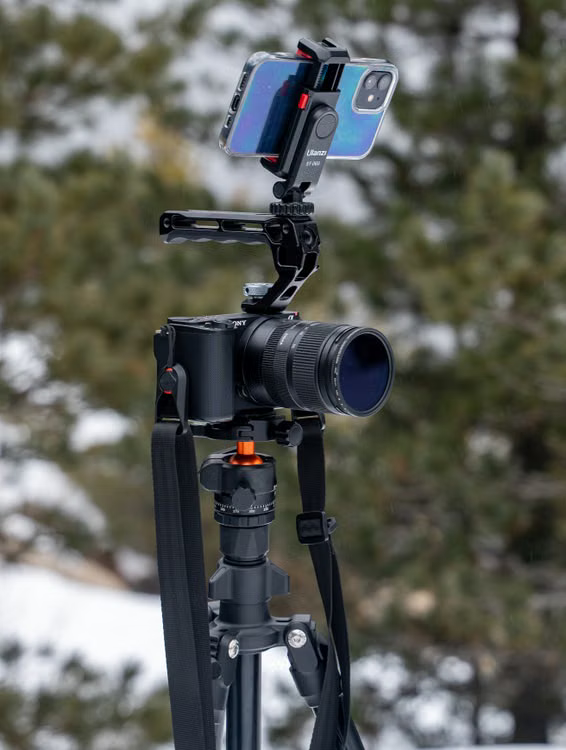
Pros
+ Solid
+ Cheaper (~50%)
Cons
– Heavier
– Worse vibration absorption
– More tiring to carry around for long
Carbon Fiber
Pros
+ Far lighter
+ Absorbs vibrations way better
+ Doesn’t rust, since there is no metal
Cons
– More expensive (~50%)
– When carbon fiber wears, it splinters along the direction of the tubes shape
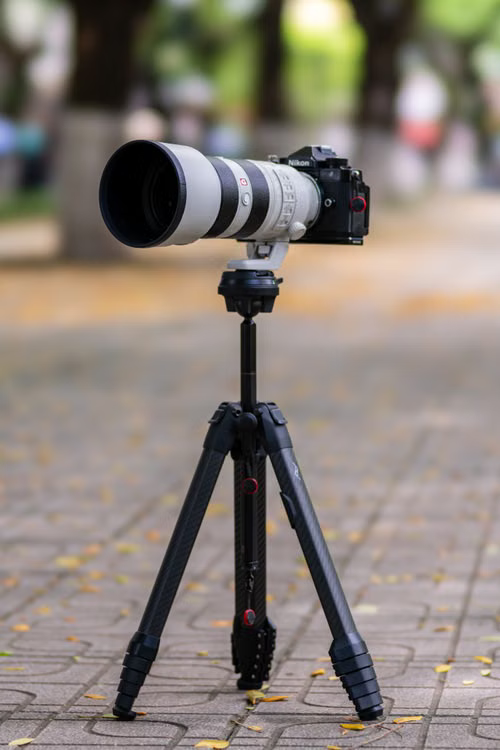
Weight an advantage?
Some people travel quite a bit with their aluminum tripod, using it for landscapes, stop motion, and everything in between, and they still love it. They even prefer the “little” extra weight.
On the other hand, there’s people who go on long hikes and appreciate the weight reduction. I can get behind both opinions.
Stability
If you take lots of pictures or shoot videos in windy areas such as beaches, near rivers, etc. the carbon fiber will tip over much faster from wind, than an aluminum would.
You could put extra weight (usually your bag) on the center hook to increase mass. You could do the same with the carbon fiber version. But then you’re carrying the extra weight along anyway.
Vibration tolerance
Say your tripod gets pushed by a gust of wind. Carbon fiber will have less vibration cycles than aluminium before returning to its net zero location.
Load rating
Carbon fiber doesn’t automatically mean a sturdier tripod. How much weight the legs and head can support comes down more to engineering and leg diameter than material alone. Some carbon fiber tripods are rated to hold as little as 9kg, while certain aluminum models are rated for 12-15kg or more. If you’re mounting a heavy body and telephoto lens, check the load rating directly rather than assuming the pricier carbon option automatically wins.
Durability
Deformation
An aluminum tripod will deform rather than shatter. A fall will dent, bend, or flatten the tube/leg at the impact point. Bent aluminum can sometimes be bent back, even if only roughly, or at least still function, even if it’s cosmetically ugly. Its weak points are usually the joints and locks, often being made of plastic or lower-grade alloy.
Shattering
A Carbon fiber tripod is stiffer, lighter and resists bending, but it doesn’t give in. It fractures.
A fall can crack or shatter the tube at that spot, especially a concentrated force on a small area.
Once cracked, that section is structurally compromised. You can’t bend it back and carbon fractures can spread with further stress.
Saltwater
When you go to use your tripod in saltwater, carbon fiber won’t need a wash with clear water afterwards.
An aluminum tripod, on the other hand, will get corrosion issues.
Final thoughts
Choosing between an aluminum vs carbon fiber tripod comes down to two things: weight and money
Traveling alot vs occasionally
If you’re someone that spends hours traveling with their camera, always carrying around a backpack full of gear, day after day for multiple shot locations, wanting to reduce your total weight makes sense.
Your equipment probably already cost you thousands of dollars, so the extra cost for carbon fiber will just be a drop in the bucket anyway and nothing you’d eat your heart out over.
On the other hand, if you’re low on budget and don’t spend every day walking around with your gear for hours on end, you’d be just fine going with the aluminum tripod.
Personal preference
Some people don’t go carbon fiber on purpose. Disregarding price entirely, but just having the extra weight and stability feels better to them, for something that’s an already as thin as a tripod.